Add-On Service · East Tennessee Lake Homes
Boat Dock Inspection
An above-the-waterline inspection of your dock’s structure, roof, electrical, water system, and safety features, bundled with your home inspection for lake-area property throughout East Tennessee.
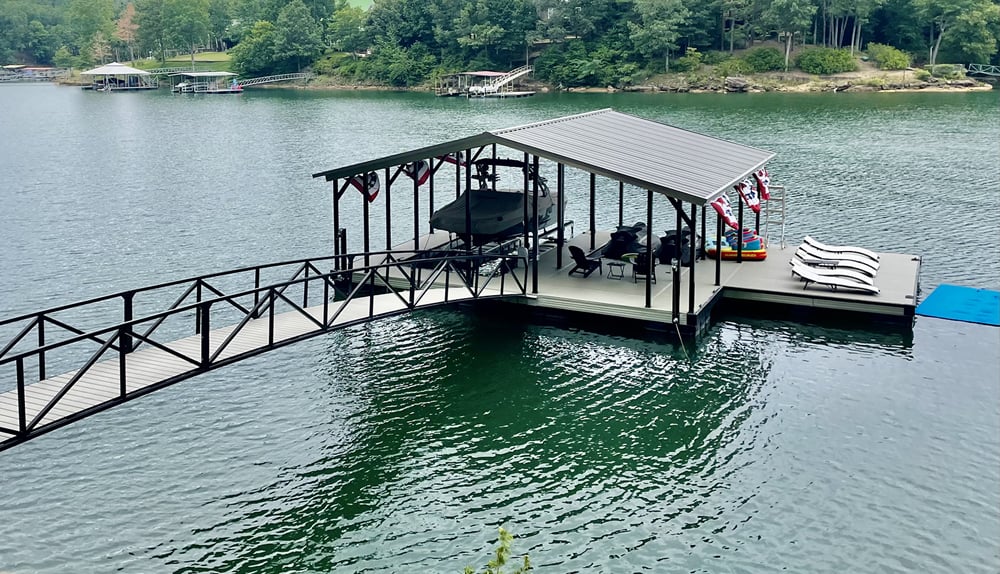
What a dock inspection covers
The same structured approach we bring to a home, applied to the dock: structural components, decking, electrical, and the water line, all documented with photos in your report.
Structure
Piles and supports, fasteners and fittings, bracing and connections, and decking. We check for movement, instability, corrosion, and loose or damaged boards or hardware.
Electrical
Wiring and cables, electrical panels and breakers, and lighting fixtures on the dock. Every GFCI outlet is tested, since GFCI protection is critical in a wet, waterside environment.
Roof
For covered slips and boathouse roofs, the covering, framing, and drainage are checked for damage, wear, and proper water shedding, the same way we’d check a home’s roof.
Water
The water line and fixtures serving the dock, checked above the waterline for leaks, damage, and proper function.
Safety features
Handrails, ladders, and cleats, checked to confirm they’re securely attached and able to support expected loads.
Local Context
Dock types common on East Tennessee lakes
Fort Loudoun, Tellico, Melton Hill, and Norris are all TVA-managed lakes, meaning water levels are drawn down seasonally. That makes the dock type itself a relevant part of the inspection.
Fixed docks
Permanently attached to shore on pilings. Stable, but a fixed dock on a lake with seasonal drawdown can end up high and dry, or fully submerged, depending on the time of year.
Floating docks
Rise and fall with the water level, anchored by cables or chains. This makes them well suited to TVA lakes specifically, since they adapt to the seasonal drawdown a fixed dock can’t.
Piling docks
Supported by vertical piles driven into the lakebed. Durable, but we check for marine borer damage, rust, and any concrete spalling at the piles.
Pipe docks
Use aluminum or steel pipe supports instead of traditional pilings. Lightweight and common on smaller residential docks, checked for corrosion and stability.
What we’re commonly looking for
The most frequent issues we find on lake docks in this region.
Decking wear and damage
Surface wear, cracks and splits at fasteners, and loose or damaged boards, which are both a safety issue and a sign of ongoing deterioration.
Rot and decay in wood components
Discoloration, softness, or sponginess in wood, checked with a probe and, where useful, a moisture meter to catch hidden moisture before it becomes structural.
Corrosion of metal components
Rust staining, pitting, and corroded fasteners on steel and aluminum components, which weaken connections over time in a constantly wet environment.
Floatation device issues (floating docks)
Waterlogged, loose, or misaligned floats can compromise a floating dock’s stability and, left unaddressed, its ability to stay afloat.
Impact damage from boats and debris
Dents, cracks, and damaged fenders from boat traffic or storm debris, common wherever a dock sees regular use.
What’s included, and what isn’t
Being clear about scope upfront, so there’s no confusion about what your report covers.
Above-the-waterline only
Our dock inspection covers everything visible and accessible above the waterline: structure, decking, electrical, safety features, and the water line serving the dock.
Underwater components, pilings below the waterline, and the lakebed anchoring system are not included. Inspecting those areas properly requires diving certification, an ROV, or sonar imaging, specialized services beyond a standard dock inspection. If underwater condition is a concern, we can help you find a qualified underwater inspector.
Dock inspection FAQ
Can I add a dock inspection to my home inspection?
Yes. It’s scheduled for the same visit as your home inspection, so you get one report covering the house and the dock.
Do you inspect underwater components?
No. This is an above-the-waterline inspection. Underwater pilings and anchoring require diving certification or sonar equipment, which is outside our scope.
What’s the difference between a fixed and floating dock, and does it matter?
It matters more on TVA-managed lakes like Fort Loudoun, Tellico, and Melton Hill, where water levels are drawn down seasonally. A floating dock adjusts with the water level; a fixed dock can end up high and dry or submerged depending on the season, which we’ll flag if relevant to the property.
Is electrical on the dock actually dangerous?
It can be. Wiring, panels, and outlets near water need working GFCI protection to prevent shock, and that’s one of the first things we test.
One Call Covers More
Our sister companies can help too.
Rn86 Solutions
Radon testing and mitigation across East Tennessee, run by the same certified team behind your inspection.
Visit Rn86 Solutions →
Q36 Pest Control
Termite and pest inspection and treatment, coordinated seamlessly with your home inspection timeline.
Visit Q36 Pest Control →Schedule your dock inspection
Bundle it with your home inspection, same visit, one report.