
A working fireplace is one of those things buyers love and inspectors get nervous about. You can shine a flashlight into a firebox and see the first few feet, but the flue itself, the part that actually carries heat, smoke, and combustion gases out of the house, runs up and out of sight. A chimney camera inspection is how we see the rest of it.
What Is a Chimney Camera Inspection?
A chimney camera inspection uses a high resolution camera to travel the full length of the flue, from the firebox at the bottom to the top of the chimney, recording live video and still images along the way. It shows the condition of the flue liner, the mortar joints, and anything sitting inside the flue that should not be there.
It is different from what happens during a standard home inspection. A general home inspection includes a visual check of the accessible parts of the chimney, the firebox, and the damper. It does not include a look inside the flue itself, because that portion simply is not visible without a camera. A chimney camera inspection is a separate, targeted service that fills in that gap.
Why a Flashlight Isn't Enough
Most of a chimney's problems live in places a flashlight cannot reach. Cracked flue tiles, deteriorated mortar joints, creosote buildup, and collapsed liner sections all happen well above what you can see standing in front of the fireplace. In older East Tennessee homes, especially ones built before the 1980s, it is common to find a flue that was never lined at all, or a clay tile liner that has been breaking down for decades without anyone knowing.
Left unaddressed, these conditions are not just cosmetic. Cracks in the liner can let heat and embers reach nearby framing, and gaps can allow carbon monoxide and other combustion gases to back draft into the living space instead of venting outside. A camera inspection is how you find out which situation you are actually dealing with before it becomes a fire or an air quality problem.
What the Camera Looks For
We run the camera the full length of the flue and document what we find. Here is what we are checking for along the way:
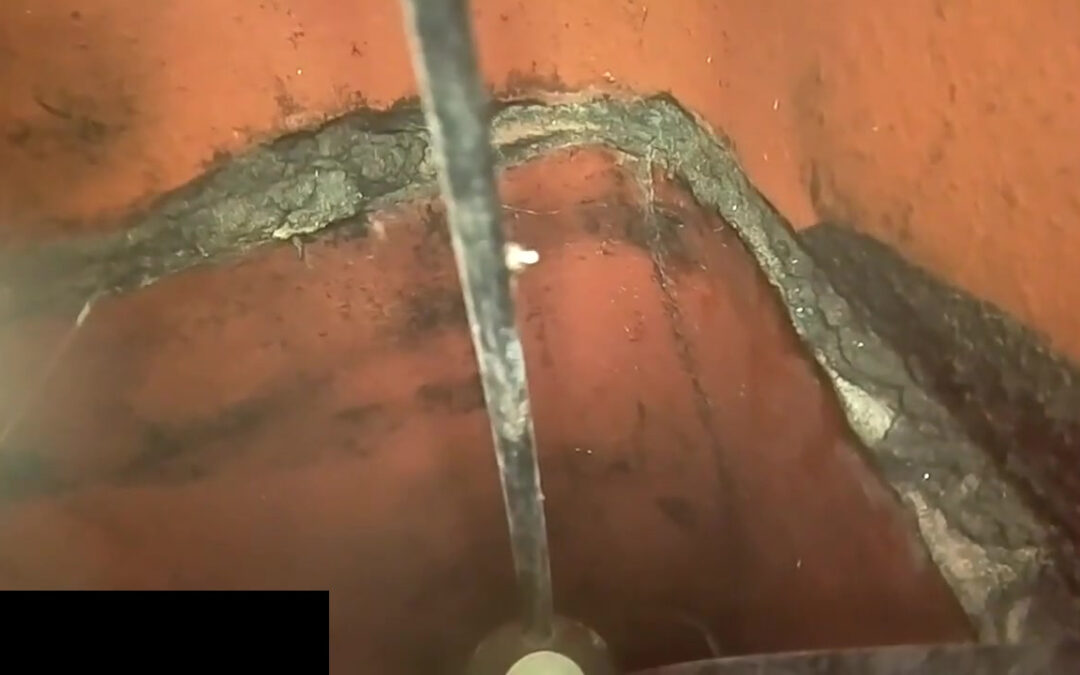
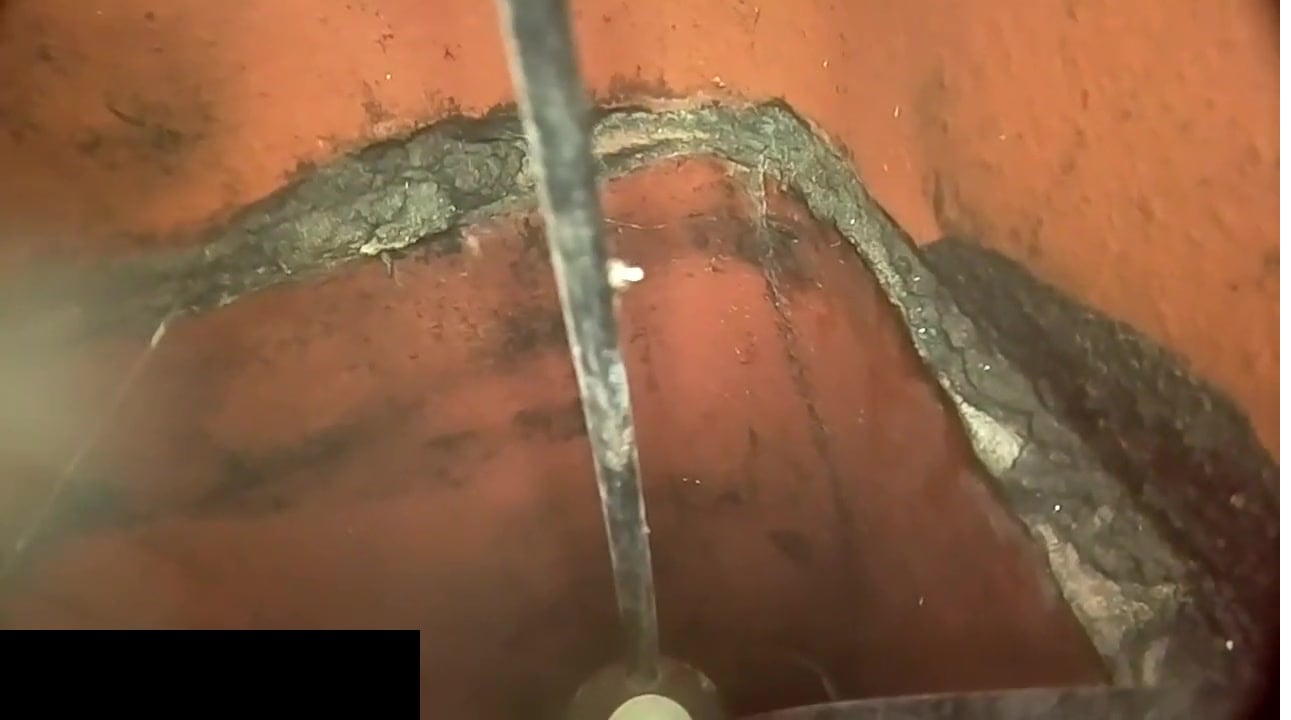
- Cracked or missing flue tiles. Clay tile liners can crack from heat cycling, settling, or age, leaving gaps between sections.
- Spalling and deterioration. Brick and mortar breakdown inside the flue that narrows the draft area or exposes the chimney structure to heat and moisture.
- Creosote buildup. Heavy glaze or advanced creosote deposits that represent a fire hazard and mean the chimney needs cleaning before use.
- Obstructions. Bird nests, debris, displaced tiles, or collapsed sections that block or restrict the flue.
- Missing or damaged liner. Some older masonry chimneys were never lined, or the liner has collapsed, leaving bare masonry as the only barrier.
- Offset or improper connections. Misaligned liner sections or connections that do not seal properly and allow combustion gases to bypass the flue.
Real chimney camera inspection footage showing cracked flue tile and deteriorated mortar joints found during a Bent Nail inspection.
Why This Matters in a Real Estate Transaction
For buyers, a documented camera inspection removes the guesswork around a chimney's condition before you close, not after you have already lit your first fire in your new home. For sellers, having that documentation ready ahead of a listing can prevent a mid-contract surprise from slowing down or reopening negotiations. Either way, a clear video record gives everyone involved, buyer, seller, and agent, the same information to work from.
This is especially relevant across East Tennessee, where a large share of the housing stock includes older masonry chimneys that have never had a camera run through them. A visual flue defect found during a camera inspection is generally treated the same way as any other inspection item, something to be negotiated or corrected before closing, rather than a reason the deal falls apart.
A Note on Scope
Bent Nail Home Inspection Services is not a certified chimney sweep. Our camera inspection is a visual evaluation of the flue for visible defects and conditions, not a cleaning, repair, or certification service. We do not remove creosote, repair liners, or certify a chimney as safe to operate. If the camera turns up conditions that need correction, we will document what we saw and recommend you bring in a CSIA certified chimney sweep for further evaluation and any needed work.
How It Works
- We set up at the firebox. The camera enters from the firebox opening, so a standard flue evaluation does not require anyone on the roof.
- The camera runs the full flue. It travels the length of the liner, capturing video and still images of the mortar joints, liner condition, and any obstructions along the way.
- We review the findings with you. Defects are documented with images and explained in plain language, not just noted as a line item.
- Your report is delivered the same day. Camera images are included in your full inspection report, typically delivered digitally within 24 hours.
Frequently Asked Questions
Is the chimney camera inspection included in a standard home inspection?
No. A standard home inspection includes a visual check of the accessible portions of the chimney, firebox, and damper. The camera inspection runs up the interior of the flue liner and is priced as a separate, add on service.
Do you have to get on the roof to do this?
Not for a standard flue camera inspection. The camera enters from the firebox at the bottom and runs up. We do recommend checking the exterior crown and cap from ground level or by ladder as part of a full chimney evaluation.
Will you tell me if my chimney is safe to use?
We document what the camera shows and describe what we observe. Since we are not a certified chimney sweep, we do not certify a chimney for use. If visible conditions suggest the chimney should be evaluated further before use, we will say so clearly in the report.
Can you run the camera in a gas fireplace flue too?
Yes. We can run the camera in a gas appliance flue the same way we do for a wood burning chimney. Liner condition and connection integrity matter regardless of fuel type.
What happens if the camera finds a problem?
Defects are photographed, noted in your report, and we recommend further evaluation or correction by a qualified, CSIA certified chimney professional. In a real estate transaction, that documentation gives buyers and sellers a clear basis for negotiating repairs before closing.
Can this be added to a home inspection I already have scheduled?
Yes. The chimney camera inspection can be added to a scheduled home inspection or booked on its own. Mention it when you schedule online or give us a call and we will make sure it is included.
Buying a home in Knoxville, Oak Ridge, or Maryville with a fireplace you want to trust? Schedule a chimney camera inspection alongside your home inspection.